Author: sarkari

  • HCL Trade Apprentice • 2019: Apply for 129 Posts, Last Date Sept 19, Read Full Details

    HCL Trade Apprentice • 2019: Apply for 129 Posts, Last Date Sept 19, Read Full Details

    Hindustan Copper Limited invites Online Applications from the Citizens of India for undergoing Training at Khetri Copper Complex for Trade Apprentice under the Apprentices Act 1961. Hindustan Copper Limited available trades are Fitter, Turner, Welder (Gas & Electric), Electrician, Electronics Mechanic, Draughtsman (Civil), Draughtsman (Mechanical), Mechanic Diesel, Pump Operator cum Mechanic, Computer peripheral & hardwarerepair & maintenance mechanic, Wire man, Stenographer (English), Laboratory Assistant, Carpenterand Surveyor Posts. How to apply, age limit, educational qualifications and other details attached below.

    Quick Look
    How to apply: Online
    Online application opening date 20.08.2019
    Cut-off date for Age & Qualification 20.08.2019
    Online application closing date 19.09.2019
    Publication of short-listed candidates List 10.10.2019
    Age Limit: Minimum 14 Years and Maximum 30 Years
    Education: 10th and ITI

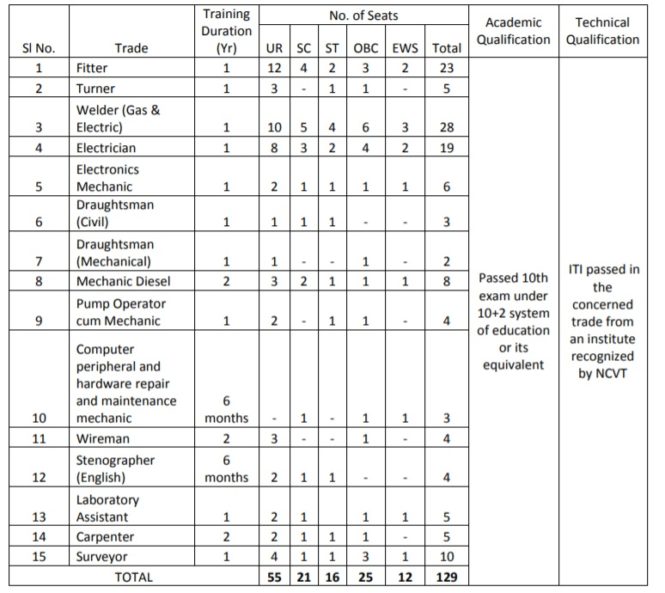
    HCL Post Names and Number of Posts

    Fitter- 23, Turner- 05, Welder (Gas & Electric) 28 Posts, Electrician- 19 Posts, Electronics Mechanic- 06, Draughtsman (Civil) 03, Draughtsman (Mechanical)- 02, Mechanic Diesel- 08, Pump Operator cum Mechanic- 04, Computer peripheral & hardwarerepair & maintenance mechanic 03, Wire man- 04, Stenographer (English)- 04, Laboratory Assistant- 05, Carpenter- 05 and Surveyor 10 Posts.

    Prescribed Qualification, Eligibility criteria, Age-limits

    1. The candidate must be ITI passed from the respective trade and must be recognized by NCVT.
    2. The candidates who have passed ITI prior to the year 2016 should attach an affidavit on non-judicial stamp paper sworn-in before a Magistrate or Notary Public to the effect that they have neither undergone apprenticeship training from anywhere earlier nor have taken employment anywhere.
    3. Candidates possessing higher professional qualifications such as Diploma / B.E. or equivalent shall not be considered. Additionally, candidates having higher academic qualification like B.A./B.Sc./B.Com etc will not be given any additional weightage.
    4. The age of the candidate should be between 14 to 30 years as on 20.08.2019. A relaxation of 5 years is admissible for SC/ST candidates and 3 years for OBC candidates in the upper age limit. All govt. guidelines on the matter will be observed.

    Selection Methodology

    The candidates will be selected on the basis of merit based on their marks obtained in ITI & 10th. A weightage of 70% to marks scored in relevant trade in ITI & a weightage of 30% shall be given to marks scored in 10th board. Additional 10 bonus marks will be given to dependants of existing employees of HCL/KCC. If two or more candidates secure equal marks while preparing merit list, then the candidate of higher age will be considered.

    How to Apply

    Candidates are advised to carefully read the full advertisement for details of educational qualifications and other eligibility criteria before submission of online application on or before 19.09.2019
    STEP 1 Apprenticeship Registration
    Candidates should register themselves for apprenticeship in Government of India portal (www.apprenticeship.gov.in). Candidate should select “Establishment Search” under establishment menu in the above site (www.apprenticeship.gov.in) and select Hindustan Copper Limited, Khetri Copper Complex for undergoing training with HCL. This is compulsory. The unique number generated on this website must be entered in the appropriate column in Step 2, otherwise, application will not be submitted.
    STEP 2 On-line submission of Application
    The candidates shall be required to submit their application online through the Company’s website (www.hindustancopper.com). No other means of / mode of application shall be accepted.

    Read full details click here

  • Chandrayaan 2 GK: Read Complete details about ISROs Lunar Mission

    Chandrayaan 2 GK: Read Complete details about ISROs Lunar Mission

    Chandrayaan 2 is an Indian lunar mission that will boldly go where no country has ever gone before — the Moon’s south polar region. Through this effort, the aim is to improve our understanding of the Moon — discoveries that will benefit India and humanity as a whole. These insights and experiences aimed at a paradigm shift in how lunar expeditions are approached for years to come — propelling further voyages into the farthest frontiers. (Souce: Isro Website)

    Why India going to the Moon?

    The Moon is the closest cosmic body at which space discovery can be attempted and documented. It is also a promising test bed to demonstrate technologies required for deep-space missions. Chandrayaan 2 attempts to foster a new age of discovery, increase our understanding of space, stimulate the advancement of technology, promote global alliances, and inspire a future generation of explorers and scientists.

    What are the scientific objectives of Chandrayaan 2? Why explore the Lunar South Pole?

    Moon provides the best linkage to Earth’s early history. It offers an undisturbed historical record of the inner Solar system environment. Though there are a few mature models, the origin of Moon still needs further explanations. Extensive mapping of lunar surface to study variations in lunar surface composition is essential to trace back the origin and evolution of the Moon. Evidence for water molecules discovered by Chandrayaan-1, requires further studies on the extent of water molecule distribution on the surface, below the surface and in the tenuous lunar exosphere to address the origin of water on Moon.

    The lunar South Pole is especially interesting because of the lunar surface area here that remains in shadow is much larger than that at the North Pole. There is a possibility of the presence of water in permanently shadowed areas around it. In addition, South Pole region has craters that are cold traps and contain a fossil record of the early Solar System.

    Chandrayaan-2 will attempt to soft land the lander -Vikram and rover- Pragyan in a high plain between two craters, Manzinus C and Simpelius N, at a latitude of about 70° south.

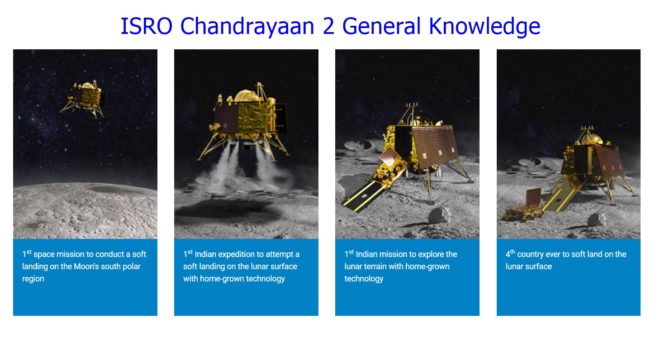
    What makes Chandrayaan 2 special?

    1st space mission to conduct a soft landing on the Moon’s south polar region

    1st Indian expedition to attempt a soft landing on the lunar surface with home-grown technology

    1st Indian mission to explore the lunar terrain with home-grown technology
    4th country ever to soft land on the lunar surface

    Chandrayaan 2 Launcher and the Spacecraft

    Launcher: The GSLV Mk-III is India’s most powerful launcher to date, and has been completely designed and fabricated from within the country.
    Vikram Lander: The lander is designed to execute India’s first soft landing on the lunar surface.
    Pragyan Rover: The rover is a 6-wheeled, AI-powered vehicle named Pragyan, which translates to ‘wisdom’ in Sanskrit.

    Read More Detials on https://www.isro.gov.in

  • SSC JE syllabus Paper-1 and Paper 2- Complete Details, Read Before Exam

    SSC JE syllabus Paper-1 and Paper 2- Complete Details, Read Before Exam

    The standard of the questions in Engineering subjects will be approximately of thelevel of Diploma in Engineering (Civil/ Electrical/ Mechanical). All the questions will be set in SI units.
    The details of the syllabus are given below:

    Paper-I:

    • General Intelligence & Reasoning: The Syllabus for General Intelligence would include questions of both verbal and non-verbal type. The test may include questions on analogies, similarities, differences, space visualization, problem-solving, analysis, judgment, decision making, visual memory, discrimination, observation, relationship concepts, arithmetical reasoning, verbal and figure classification, arithmetical number series, etc. The test will also include questions designed to test the candidate‟s abilities to deal with abstract ideas and symbols and their relationships, arithmetical computations and other analytical functions.
    • General Awareness: Questions will be aimed at testing the candidate‟s general awareness of the environment around him/ her and its application to society. Questions will also be designed to test knowledge of current events and of such matters of everyday observations and experience in their scientific aspect as may be expected of any educated person.
    • The test will also include questions relating to India and its neighbouring countries especially pertaining to History, Culture, Geography, Economic Scene, General Polity and Scientific Research, etc.
      These questions will be such that they do not require a special study of any discipline.

    Paper-1 Syllabus

    General Engineering: Civil & Structural, Electrical and Mechanical:
    Part-A (Civil Engineering): Building Materials, Estimating, Costing and Valuation, Surveying, Soil Mechanics, Hydraulics,Irrigation Engineering, Transportation Engineering, Environmental Engineering.
    Structural Engineering: Theory of Structures, Concrete Technology, RCC Design, Steel Design.

    Part-B (Electrical Engineering): Basic concepts, Circuit law, Magnetic Circuit, AC Fundamentals, Measurement and Measuring instruments, Electrical Machines, Fractional Kilowatt Motors and single phase induction Motors, Synchronous Machines, Generation, Transmission and Distribution, Estimation and Costing, Utilization and Electrical Energy, Basic Electronics.

    Part-C (Mechanical Engineering): Theory of Machines and Machine Design, Engineering Mechanics and Strength of Materials, Properties of Pure Substances, 1st Law of Thermodynamics, 2nd Law of Thermodynamics, Air standard Cycles for IC Engines, IC Engine Performance, IC Engines Combustion, IC Engine Cooling & Lubrication, Rankine cycle of System, Boilers, Classification, Specification, Fitting & Accessories, Air Compressors & their cycles, Refrigeration cycles, Principle of Refrigeration Plant, Nozzles & Steam Turbines.
    Properties & Classification of Fluids, Fluid Statics, Measurement of Fluid Pressure, Fluid kinematics, Dynamics of Ideal fluids, Measurement of Flow rate, basic principles, Hydraulic Turbines, Centrifugal Pumps, Classification of steel.

    Paper II

    Part-A (Civil & Structural Engineering)

    Building Materials: Physical and Chemical properties, classification, standard tests, uses and manufacture/ quarrying of materials e.g. building stones, silicate based materials, cement (Portland), asbestos products, timber and wood based products, laminates, bituminous materials, paints, varnishes.

    Estimating, Costing and Valuation

    estimate, glossary of technical terms, analysis of rates, methods and unit of measurement, Items of work – earthwork, Brick work (Modular & Traditional bricks), RCC work, Shuttering, Timber work, Painting, Flooring, Plastering, Boundary wall, Brick building, Water Tank, Septic tank, Bar bending schedule, Centre line method, Mid-section formula, Trapezodial formula, Simpson‟s rule, Cost estimate of Septic tank, flexible pavements, Tube well, isolates and combined footings, Steel Truss, Piles and pile-caps. Valuation – Value and cost, scrap value, salvage value, assessed value, sinking fund, depreciation and obsolescence, methods of valuation.

    Surveying:

    Principles of surveying, measurement of distance, chain surveying, working of prismatic compass, compass traversing, bearings, local attraction, plane table surveying, theodolite traversing, adjustment of theodolite, Levelling, Definition of terms used in levelling, contouring, curvature and refraction corrections, temporary and permanent adjustments of dumpy level, methods of contouring, uses of contour map, tachometric survey, curve setting, earth work calculation, advanced surveying equipment.

    Soil Mechanics

    Origin of soil, phase diagram, Definitions-void ratio, porosity, degree of saturation, water content, specific gravity of soil grains, unit weights, density index and interrelationship of different parameters, Grain size distribution curves and their uses Index properties of soils, Atterberg‟s limits, ISI soil classification and plasticity chart Permeability of soil, coefficient of permeability, determination of coefficient of permeability, Unconfined and confined aquifers, effective stress, quick sand, consolidation of soils, Principles of consolidation, degree of consolidation, pre-consolidation pressure, normally consolidated soil, e-log p curve, computation of ultimate settlement Shear strength of soils, direct shear test, Vane shear test, Triaxial test Soil compaction, Laboratory compaction test, Maximum dry density and optimum moisture. content, earth pressure theories, active and passive earth pressures, Bearing capacity of soils, plate load test, standard penetration test.

    Hydraulics

    Fluid properties, hydrostatics, measurements of flow, Bernoulli‟s theorem and its application, flow through pipes, flow in open channels, weirs, flumes, spillways, pumps and turbines Irrigation Engineering: Definition, necessity, benefits, 2II effects of irrigation, types and methods of irrigation, Hydrology – Measurement of rainfall, run off coefficient, rain gauge, losses from precipitation – evaporation, infiltration, etc Water requirement of crops, duty, delta and base period, Kharif and Rabi Crops, Command area, Time factor, Crop ratio, Overlap allowance, Irrigation efficiencies Different type of canals, types of canal irrigation, loss of water in canals Canal lining – types and advantages Shallow and deep to wells, yield from a well Weir and barrage, Failure of weirs and permeable foundation, Slit and Scour, Kennedy‟s theory of critical velocity Lacey‟s theory of uniform flow Definition of flood, causes and effects, methods of flood control, water logging, preventive measure Land reclamation, Characteristics of affecting fertility of soils, purposes, methods, description of land and reclamation processes Major irrigation projects in India.

    Transportation Engineering: Highway Engineering – cross sectional elements, geometric design, types of pavements, pavement materials – aggregates and bitumen, different tests, Design of flexible and rigid pavements – Water Bound Macadam (WBM) and Wet Mix Macadam (WMM), Gravel Road, Bituminous construction, Rigid pavement joint, pavement maintenance, Highway drainage, Railway Engineering- Components of permanent way – sleepers, ballast, fixtures and fastening, track geometry, points and crossings, track junction, stations and yards Traffic Engineering – Different traffic survey, speed-flow-density and their interrelationships, intersections and interchanges, traffic signals, traffic operation, traffic signs and markings, road safety Environmental Engineering: Quality of water, source of water supply, purification of water, distribution of water, need of sanitation, sewerage systems, circular sewer, oval sewer, sewer appurtenances, sewage treatments Surface water drainage, Solid waste management – types, effects, engineered management system Air pollution – pollutants, causes, effects, control Noise pollution – cause, health effects, control.

    Structural Engineering: Theory of structures: Elasticity constants, types of beams – determinate and indeterminate, bending moment and shear force diagrams of simply supported, cantilever and over hanging beams Moment of area and moment of inertia for rectangular & circular sections, bending moment and shear stress for tee, channel and compound sections, chimneys, dams and retaining walls, eccentric loads, slope deflection of simply supported and cantilever beams, critical load and columns, Torsion of circular section.
    Concrete Technology: Properties, Advantages and uses of concrete, cement aggregates, importance of water quality, water cement ratio, workability, mix design, storage, batching, mixing, placement, compaction, finishing and curing of concrete, quality control of concrete, hot weather and cold weather concreting, repair and maintenance of concrete structures.
    RCC Design: RCC beams-flexural strength, shear strength, bond strength, design of singly reinforced and double reinforced beams, cantilever beams T-beams, lintels One way and two way slabs, isolated footings Reinforced brick works, columns, staircases, retaining wall, water tanks (RCC design questions may be based on both Limit State and Working Stress methods) Steel Design: Steel design and construction of steel columns, beams roof trusses plate girders.

    Part-B (Electrical Engineering):
    Basic concepts: Concepts of resistance, inductance, capacitance, and various factors affecting them Concepts of current, voltage, power, energy and their units.

    Circuit law: Kirchhoff‟s law, Simple Circuit solution using network theorems

    Magnetic Circuit: Concepts of flux, mmf, reluctance, Different kinds of magnetic materials, Magnetic calculations for conductors of different configuration eg straight, circular, solenoidal, etc Electromagnetic induction, self and mutual induction.

    AC Fundamentals: Instantaneous, peak, RMS and average values of alternating waves, Representation of sinusoidal wave form, simple series and parallel AC Circuits consisting of RL and C, Resonance, Tank Circuit Poly Phase system – star and delta connection, 3 phase power, DC and sinusoidal response of R-Land R-C circuit.

    Measurement and measuring instruments: Measurement of power (1 phase and 3 phase, both active and re-active) and energy, 2 wattmeter method of 3 phase power measurement, Measurement of frequency and phase angle Ammeter and voltmeter (both moving oil and moving iron type), extension of range wattmeter, Multimeters, Megger, Energy meter AC Bridges Use of CRO, Signal Generator, CT, PT and their uses Earth Fault detection.

    Electrical Machines : (a) DC Machine – Construction, Basic Principles of DC motors and generators, their characteristics, speed control and starting of DC Motors Method of braking motor, Losses and efficiency of DC Machines (b) 1 phase and 3 phase transformers – Construction, Principles of operation, equivalent circuit, voltage regulation, OC and SC Tests, Losses and efficiency Effect of voltage, frequency and wave form on losses Parallel operation of 1 phase /3 phase transformers Auto transformers (c) 3 phase induction motors, rotating magnetic field, principle of operation, equivalent, circuit, torque-speed characteristics, starting and speed control of 3 phase induction motors Methods of braking, effect of voltage and frequency variation on torque speed characteristics.

    Fractional Kilowatt Motors and Single Phase Induction Motors: Characteristics and application Synchronous Machines – Generation of 3-phase emf armature reaction, voltage regulation, parallel operation of two alternators, synchronizing, control of active and reactive power Starting and applications of synchronous motors.
    Generation, Transmission and Distribution – Different types of power stations, Load factor, diversity factor, demand factor, cost of generation, inter-connection of power stations Power factor improvement, various types of tariffs, types of faults, short circuit current for symmetrical faults Switchgears – rating of circuit breakers, Principles of arc extinction by oil and air, HRC Fuses, Protection against earth leakage / over current, etc Buchholtz relay, Merz-Price system of protection of generators & transformers, protection of feeders and bus bars Lightning arresters, various transmission and distribution system, comparison of conductor materials, efficiency of different system Cable – Different type of cables, cable rating and derating factor.
    Estimation and costing : Estimation of lighting scheme, electric installation of machines and relevant IE rules Earthing practices and IE Rules.
    Utilization of Electrical Energy : Illumination, Electric heating, Electric welding, Electroplating, Electric drives and motors.
    Basic Electronics : Working of various electronic devices eg P N Junction diodes, Transistors (NPN and PNP type), BJT and JFET Simple circuits using these devices.

    Part- C (Mechanical Engineering):
    Theory of Machines and Machine Design:
    Concept of simple machine, Four bar linkage and link motion, Flywheels and fluctuation of energy, Power transmission by belts – V-belts and Flat belts, Clutches – Plate and Conical clutch, Gears –Type of gears, gear profile and gear ratio calculation, Governors – Principles and classification, Riveted joint, Cams, Bearings, Friction in collars and pivots.

    Engineering Mechanics and Strength of Materials:
    Equilibrium of Forces, Law of motion, Friction, Concepts of stress and strain, Elastic limit and elastic constants, Bending moments and shear force diagram, Stress in composite bars, Torsion of circular shafts, Bucking of columns – Euler‟s and Rankin‟s theories, Thin walled pressure vessels.

    Thermal Engineering:
    Properties of Pure Substances: p-v & P-T diagrams of pure substance like H2O, Introduction of steam table with respect to steam generation process; definition of saturation, wet & superheated status Definition of dryness fraction of steam, degree of superheat of steam H-s chart of steam (Mollier‟s Chart).
    1st Law of Thermodynamics: Definition of stored energy & internal energy, 1st Law of Thermodynamics of cyclic process, Non Flow Energy Equation, Flow Energy & Definition of Enthalpy, Conditions for Steady State Steady Flow; Steady State Steady Flow Energy Equation.
    2nd Law of Thermodynamics: Definition of Sink, Source Reservoir of Heat, Heat Engine, Heat Pump & Refrigerator; Thermal Efficiency of Heat Engines & co-efficient of performance of Refrigerators, Kelvin – Planck & Clausius Statements of 2nd Law of Thermodynamics, Absolute or Thermodynamic Scale of temperature, Clausius Integral, Entropy, Entropy change calculation of ideal gas processes Carnot Cycle & Carnot Efficiency, PMM-2; definition & itsimpossibility
    Air standard Cycles for IC engines: Otto cycle; plot on P-V, T-S Planes; Thermal Efficiency,Diesel Cycle; Plot on P-V, T-S planes; Thermal efficiency.
    IC Engine Performance, IC Engine Combustion, IC Engine Cooling & Lubrication.
    Rankine cycle of steam: Simple Rankine cycle plot on P-V, T-S, h-s planes, Rankine cycle efficiency with & without pump work.
    Boilers; Classification; Specification; Fittings & Accessories: Fire Tube & Water Tube Boilers Air Compressors & their cycles; Refrigeration cycles; Principle of a Refrigeration Plant; Nozzles & Steam Turbines.
    Fluid Mechanics & Machinery: Properties & Classification of Fluid: ideal & real fluids, Newton‟s law of viscosity, Newtonian and Non-Newtonian fluids, compressible and incompressible fluids.
    Fluid Statics: Pressure at a point measurement of Fluid Pressure: Manometers, U-tube, Inclined tube.
    Fluid Kinematics: Stream line, laminar & turbulent flow, external & internal flow, continuity equation.
    Dynamics of ideal fluids: Bernoulli‟s equation, Total head; Velocity head; Pressure head; Application of Bernoulli‟s equitation.
    Measurement of Flow rate Basic Principles: Venturimeter, Pilot tube, Orifice meter.
    Hydraulic Turbines: Classifications, Principles.
    Centrifugal Pumps: Classifications, Principles,Performance Production Engineering:
    Classification of Steels : mild steal & alloy steel, Heat treatment of steel, Welding – Arc Welding, Gas Welding, Resistance Welding, Special Welding Techniques ie TIG, MIG, etc (Brazing & Soldering), Welding Defects & Testing; NDT, Foundry & Casting – methods, defects, different casting processes, Forging, Extrusion, etc, Metal cutting principles, cutting tools, Basic Principles of machining with (i) Lathe (ii) Milling (iii) Drilling (iv) Shaping (v) Grinding, Machines, tools & manufacturing processes.
  • BESCOM Apprenticeship Training 2019: Apply for 400 Posts, Last Date August 31

    BESCOM Apprenticeship Training 2019: Apply for 400 Posts, Last Date August 31

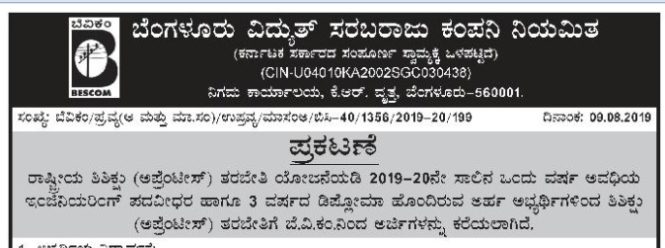
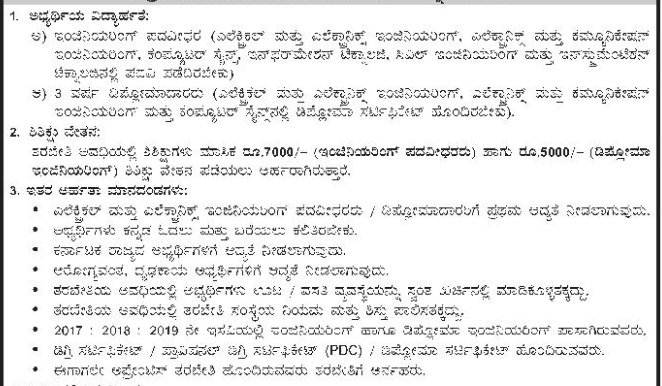
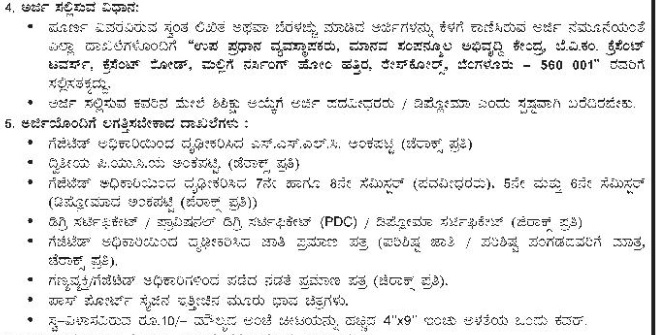
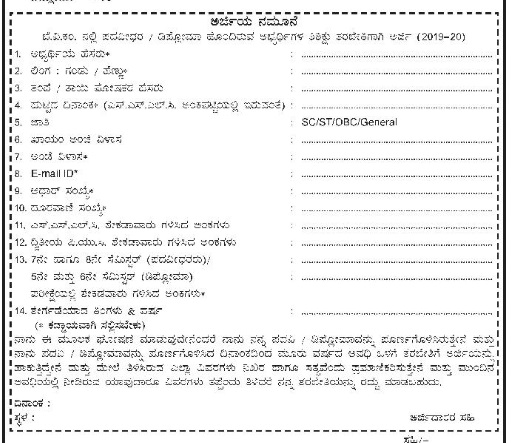
    Bangalore Electricity Supply Company (BESCOM) invites online application from the eligible candidates for the Graduate Apprentice & Diploma Apprentice Posts. Total 400 Posts available in BESCOM. BESCOM apprenticeship training 2019- Apply Online Mode- Last Date 31st August 2019. Read Below Notification. Kannada Notification of Graduate Apprentice & Diploma Apprentice Posts in Bangalore Electricity Supply Company (BESCOM).

    Post Name: BESCOM apprenticeship training 2019
    Number of Posts: 400
    How to Apply: Online
    Starting Date to Apply Online: August 14, 2019
    Last Date to Apply Online: August 31, 2019

    Educational Qualification for BESCOM Apprenticeship Training 2019

    How to apply for BESCOM Apprenticeship Training 2019

    BESCOM Website Address

  • SSC JE Recruitment 2019: Apply Online Before Sept 12, Read Full Notification

    SSC JE Recruitment 2019: Apply Online Before Sept 12, Read Full Notification

    Staff Selection Commission invites online application from the eligible candidates for the Junior Engineer Exam 2019. SSC will hold an open competitive Examination for recruitment of Junior Engineer (Civil, Mechanical, Electrical, and Quantity Surveying & Contracts) for various Ministries/ Departments/ Organizations in the Government of India. The posts are Group „B‟ (Non-Gazetted), in Level-6 (Rs 35400- 112400/-) of pay matrix of 7th Central Pay Commission.

    SSC JUNIOR ENGINEER (CIVIL, MECHANICAL, ELECTRICAL AND QUANTITY SURVEYING & CONTRACTS) EXAMINATION, 2019

    • Submission of online applications: 13.08.2019 to 12.09.2019
    • Last date for receipt of applications: 12.09.2019 (17:00)
    • Last date for making online fee payment: 14.09.2019 (17:00)
    • Last date for generation of offline Challan: 14.09.2019 (17:00)
    • Last date for payment through Challan (during working hours of Bank): 16.09.2019
    • Date of Computer Based Examination (Paper-I): To be notified later
    • Date of Paper-II (Conventional): To be notified later

    Age Limit for SSC JE Exam 2019

    • Central Water Commission Junior Engineer (Civil) Up to 32 years
    • Central Water Commission Junior Engineer (Mechanical) Up to 32 years
    • Central Public Works Department (CPWD) Junior Engineer (Civil) Up to 32 years
    • Central Public Works Department(CPWD) Junior Engineer (Electrical) Up to 32 years
    • Military Engineer Services (MES) Junior Engineer (Civil) Up to 30 years
    • Military Engineer Services (MES) Junior Engineer (Electrical and Mechanical) Up to 30 years
    • Farakka Barrage Project Junior Engineer (Civil) Up to 30 years
    • Farakka Barrage Project Junior Engineer (Electrical) Up to 30 years
    • Farakka Barrage Project Junior Engineer (Mechanical) Up to 30 years
    • Border Road Organization Junior Engineer (Civil) Up to 30 years
    • Border Road Organization Junior Engineer (Electrical &Mechanical) Up to 30 years
    • Central Water and Power Research Station Junior Engineer (Civil) Up to 30 years
    • Central Water and Power Research Station Junior Engineer (Electrical) Up to 30 years
    • Central Water and Power Research Station Junior Engineer (Mechanical) Up to 30 years
    • Directorate of Quality Assurance (Naval) Junior Engineer (Mechanical) Up to 30 years
    • National Technical Research Organization (NTRO) Junior Engineer (Civil) Up to 30 years
    • National Technical Research Organization (NTRO) Junior Engineer (Electrical) Up to 30 years
    • National Technical Research Organization (NTRO) Junior Engineer (Mechanical) Up to 30 years

    Age-relaxation permissible beyond the upper age limit
    SC/ ST 5 years and OBC 3 years and Persons with Disabilities (PwD) 10 years. PwD + OBC 13 years. PwD + SC/ ST 15 years. Ex-Servicemen (ESM) 3 years after deduction of the military service rendered from the actual age.

    How to Apply

    The applications must be submitted through online mode only.

    Application Fee

    Fee payable: Rs 100/- (Rs one hundred only). Fee can be paid through BHIM UPI, Net Banking or by using Visa, Mastercard, Maestro, RuPay Credit or Debit card or in cash at SBI Branches by generating SBI Challan. Women candidates and candidates belonging to Scheduled Castes (SC), Scheduled Tribes (ST), Persons with disabilities (PwD) and Ex-Servicemen eligible for reservation are exempted from payment of fee.

    Online fee can be paid by the candidates up to 14.09.2019 (17:00). However, candidates who wish to make the payment through challan of SBI, may make the payment in cash at the designated branches of SBI within the working hours of bank up to 16.09.2019 provided the challan has been generated by them before 14.09.2019 (17:00).

    Educational Qualifications for SSC JE Exam

    Junior Engineer (Civil), Central Water Commission: Degree or Diploma in Civil Engineering from a recognized University or Institution.

    Junior Engineer (Mechanical), Central Water Commission: Degree or Diploma in Mechanical Engineering from a recognized University or Institution.

    Junior Engineer (Civil),CPWD: Diploma in Civil Engineering from a recognized University or Institute.

    Junior Engineer (Electrical), CPWD: Diploma in Electrical or Mechanical Engineering from a recognized University or Institute.

    Junior Engineer (Civil), MES: Degree in Civil Engineering from a recognized University
    Or
    (a) Three years Diploma in Civil Engineering from a recognized Institute or University or Board; and (b) Two years experience in Planning, Execution and Maintenance of Civil Engineering works.

    Junior Engineer (Electrical &Mechanical),MES: Degree in Electrical or Mechanical Engineering from a recognized University; Or
    (a) Three years diploma in Electrical or Mechanical Engineering from a recognized Institute orUniversity or Board; and (b) Two years experience in Planning, Execution and Maintenance of Electrical or Mechanical Engineering works.

    Junior Engineer (Civil), Farakka Barrage Project.
    Diploma in Civil Engineering from a recognized University or Institute or Board.

    Junior Engineer (Electrical), Farakka Barrage Project.
    Diploma in Electrical Engineering from a recognized University or Institute or Board.

    Junior Engineer (Mechanical), Farakka Barrage Project.
    Diploma in Mechanical Engineering from a recognized University or Institute or Board.

    Junior Engineer (Civil), Border Roads Organization, Ministry of Defence.
    Degree in Civil Engineering from a recognized University/ Institute
    or
    (a) Three years Diploma in Civil Engineering from a recognized University/ Institute/ Board; and
    (b) Two years working experience in Planning/Execution/ Maintenance of Civil Engineering works.

    Junior Engineer (Electrical &Mechanical), Border Roads Organization, Ministry of Defence.
    Degree in Electrical or Mechanical Engineering from a recognized University/ Institute;
    or
    (a) Three years Diploma in Electrical/ Automobile/Mechanical Engineering from a recognized University/ Institute/ Board; and
    (b) Two years experience in Planning/ Execution/ Maintenance of Electrical or Mechanical Engineering works.

    Junior Engineer (Civil), Central Water Power Research Station.
    Diploma in Civil Engineering from a recognized Institute.

    Junior Engineer (Electrical), Central Water Power Research Station.
    Diploma in Electrical Engineering from a recognized Institute.

    Junior Engineer (Mechanical), Central Water Power Research Station.
    Diploma in Mechanical Engineering from a recognized Institute.

    Junior Engineer (Mechanical), Directorate of Quality Assurance, (Naval).
    Degree in Mechanical Engineering from a recognized Institute;
    or
    (a) Three years Diploma in Mechanical Engineering from a recognized University or Institution plus
    (b) Two years experience in the respective field.

    Junior Engineer (Electrical), Directorate of Quality Assurance, (Naval).
    Degree in Electrical Engineering from a recognized University;
    or
    (a) Three years Diploma in Electrical Engineering from a recognized University or Institution plus
    (b) Two years experience in the respective field.

    Junior Engineer (Civil), National Technical Research Organization.
    Diploma in Civil Engineering from a recognized University/ Institution.

    Junior Engineer (Electrical), National Technical Research Organization.
    Diploma in Electrical Engineering from a recognized University/ Institution.

    Junior Engineer (Mechanical) National Technical Research Organization
    Diploma in Mechanical Engineering from a recognized University/ Institution

    SSC JE Exam Centre in Karnataka and Kerala
    Belagavi, Bengaluru, Hubballi, Kalaburagi (Gulbarga), Mangaluru, Mysuru, Shivamogga, Udupi. Ernakulam, Kannur, Kollam, Kottayam, Kozhikode, Thrissur, Thiruvananthapuram, Kavaratti.

    www.ssckkr.kar.nic.in

    For More Details Click Here

  • Kanchipuram Cooperative Bank Jobs- Apply for 238 Assistant Posts, Read Full Details

    Kanchipuram Cooperative Bank Jobs- Apply for 238 Assistant Posts, Read Full Details

    Tamil Nadu State Cooperative Bank Kanchipuram Central Co-Operative Bank invites online application from the eligible candidates for the Assistant Posts. Kanchipuram Cooperative Bank Released two separate notification for the assistant posts. Interested candidates apply before Sept 5, 2019. How to Apply? Age Limit, Educational Qualifications, Application fees and Other Details Attached Below. Read More details on the Tamil language at Kpmdrb website.

    Bank Name: Kanchipuram Central Co Operative Bank
    Kanchipuram Central Co Operative Bank Address: Nethaji Nagar, Kanchipuram, SH-58, Kanchipuram Chengalpattu Road, Kanchipuram, Kanchipuram, 631501
    Post Name: Assistant
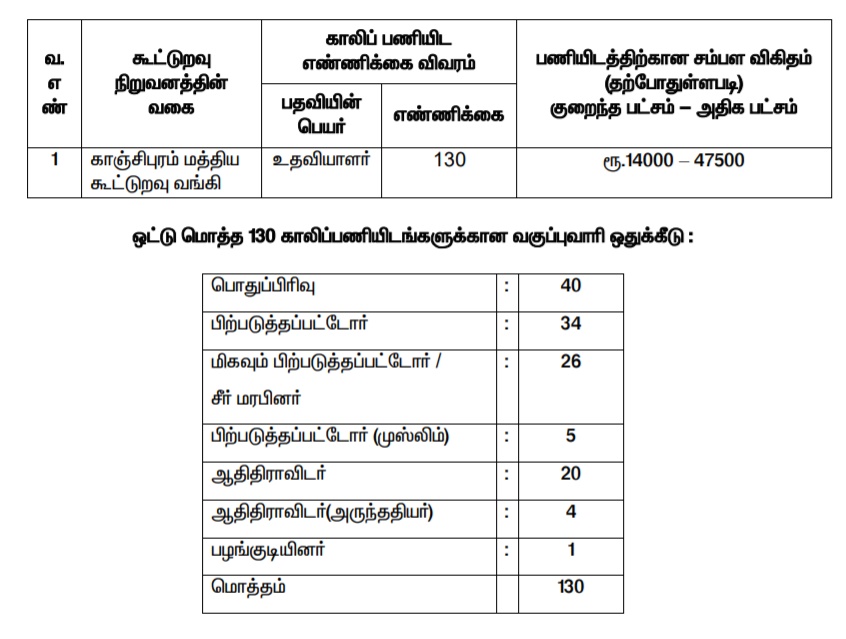
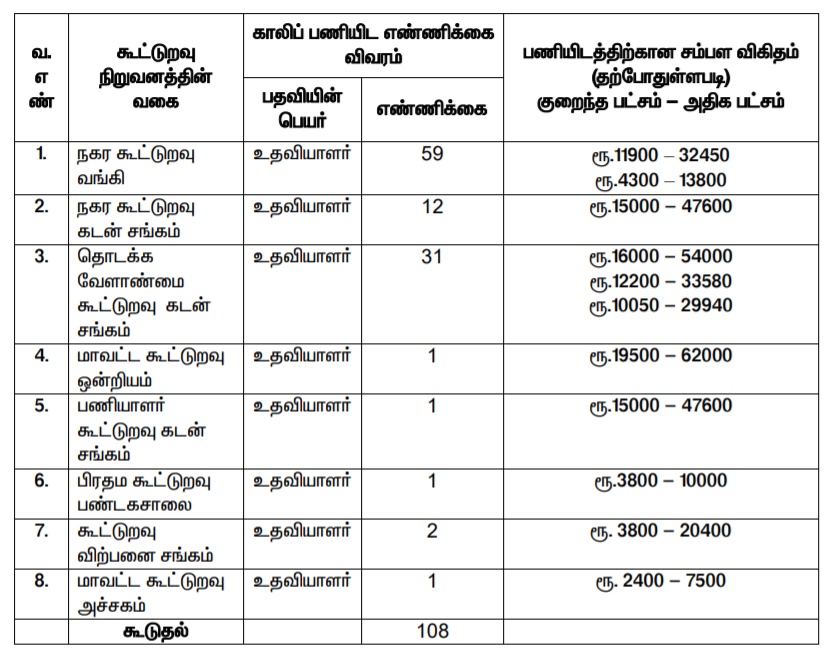
    Number of Posts: 130+108= 238
    How to Apply: Apply Online
    Last Date to Apply Online: 05-09-2019
    Application Fees: INR 250
    How to Pay Application Fees: Pay via Online Mode or Offline via Kanchipuram Cooperatiove Bank challan
    Educational Qualifications: Any Degree

    Post Details

    Assistant in Kanchipuram Central Cooperative Bank: 130 Assistant Posts

    Assistant in Cooperative Institutions in Kancheepuram District: 108 Posts

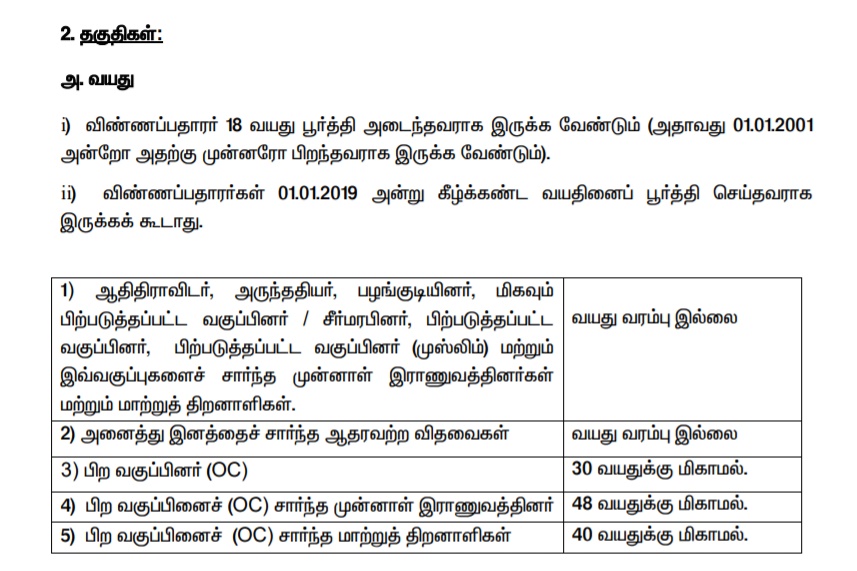
    Age Limit for Kpmdrb Assistant Jobs: Minimum 18 years and Maximum 30 years. Age Limit available as for the govt rules.

    Salary for Assistant Posts
    District Central Cooperative Bank Payscale: INR 14000 – 47500
    District Central Cooperative Bank Payscale: INR 1900–32450 / 15000-47600 / 16000-54000 / 2200-33580 / 10050-29940 / 19500-62000 / 3800-10000/ 3800-20400 / 2400-7500

    The Tamil Language is one of the subjects in Matric/PUC

    How to Apply: Apply via online. For More details and apply online please visit www.kpmdrb.in website.

    Assistant in Kanchipuram Central Cooperative Bank Notification

    Assistant in Cooperative Institutions in Kancheepuram District Notification